
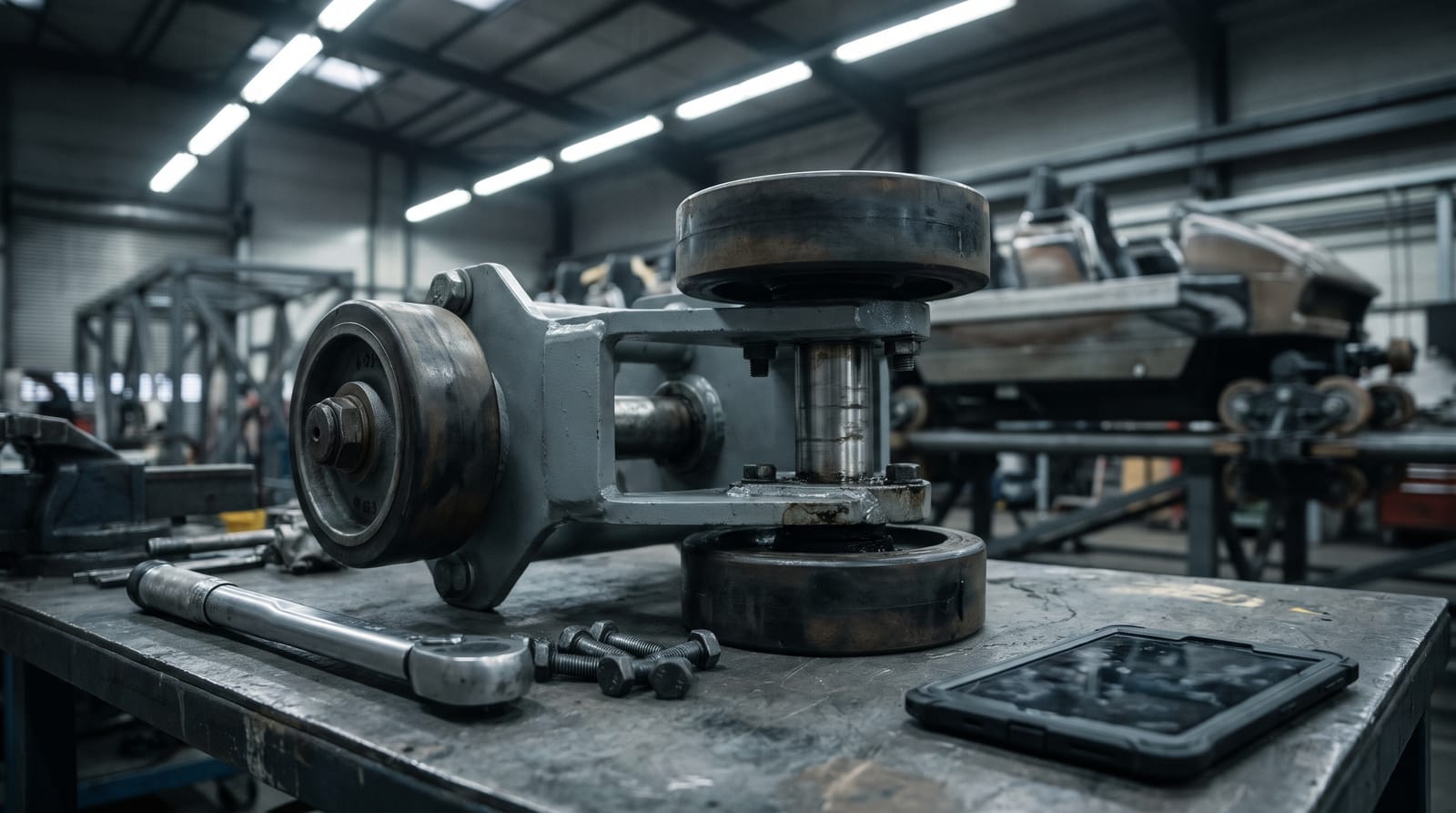
The most important document on any roller coaster isn’t the planning application or the press release. It’s the maintenance manual, and the question of whether the copy in the workshop is the current one.
That is the problem Dutch manufacturer Vekoma and Danish software firm Mobaro say they have now solved for their shared customers. Announced on 10 November, ahead of the IAAPA Expo in Orlando, it is the first working feature from a partnership the two signed at the same show a year ago.
What happened
According to the companies, Vekoma’s technical documentation now syncs automatically with Mobaro, the maintenance and safety platform a lot of parks already use to plan inspections and log work. In the words of the announcement reported by Blooloop: “When Vekoma publishes an updated revision, it can appear in Mobaro without the operator needing to upload the document again.”
The firms say more than 50 parks and attractions already run both Vekoma rides and Mobaro, so this isn’t a pilot at a single site. It will be shown on both companies’ stands at IAAPA Expo 2026, which opens its show floor on 17 November.
Rob Steens, Vekoma’s executive vice-president of after sales, described the status quo the partnership is meant to replace: “The industry has traditionally relied on separate systems, manual processes, and fragmented information flows.” Mobaro’s chief executive, Christoffer Weiss Borup, called it “a more connected future for attraction operations.”
The detail: what’s live and what’s still roadmap
This is worth separating carefully, because the November 2025 announcement promised rather more than has shipped so far.
| Feature | Status (November 2026) |
|---|---|
| Automatic sync of Vekoma manuals and document revisions into Mobaro | Live |
| Service requests to Vekoma from inside Mobaro, with ride, task and document attached | In development |
| Spare-parts requisition from Vekoma drawings, part numbers or barcode scans | Planned, not yet in development |
The 2025 agreement also talked up direct parts ordering with stock visibility and payment, operator-proposed edits to Vekoma content (which Vekoma would review), and a two-way data exchange feeding “long-term insights and advisory services”. The companies say further functionality is planned for 2027. Until it ships, treat those as intentions, not features.
Mobaro is based near Aarhus and its platform is what the trade calls a CMMS — a computerised maintenance management system, the software that schedules who inspects what, when, and records that they did. Vekoma, founded in 1926 and owned since 2018 by Japan’s Sansei Technologies, is the first manufacturer to plug into it this way. Mobaro says it intends to add others.
What it actually means
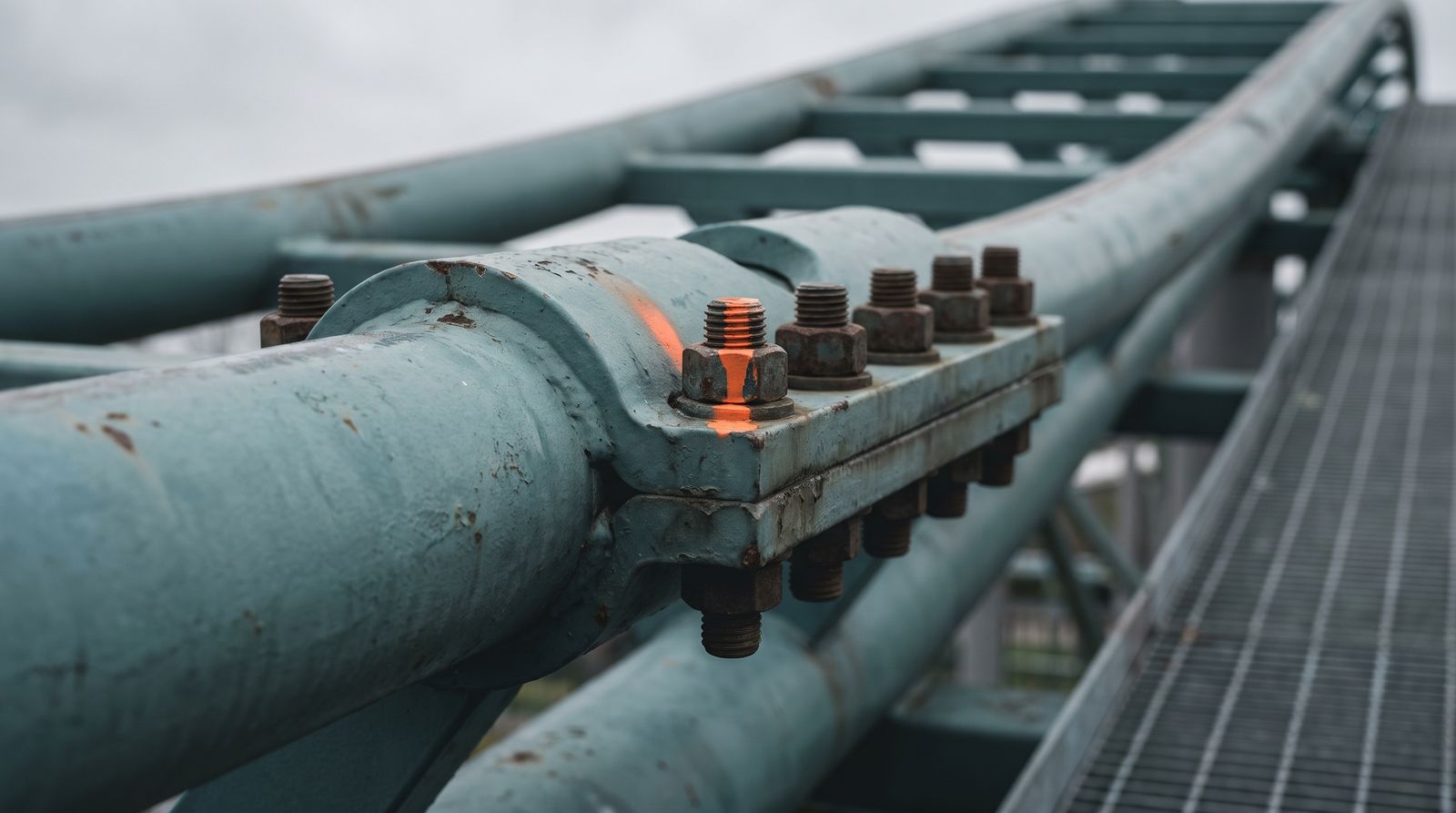
A coaster’s maintenance regime isn’t invented by the park. It starts with the manufacturer’s documentation: inspection intervals, torque values for every bolted joint, wheel wear limits, which welds get crack-tested and how often. The three overlapping inspection regimes — daily test runs, the annual strip-down, the independent sign-off under ADIPS in Britain or EN 13814 on the Continent — all assume the people doing the work are following the manual as it currently stands.
Manuals change. Manufacturers learn things from their fleet: a component wears faster than modelled, an interval needs shortening, a procedure needs another step. That knowledge reaches parks as revised documents and service bulletins. As both companies describe the old way of working, the revision then has to be downloaded, read, and manually copied into whatever system generates the morning’s checklist. Every one of those steps is a place where the old version can survive.
Pushing revisions directly into the system that writes the checklist removes that gap. It doesn’t change any engineering on the ride, and nobody should pretend it does. What it changes is version control: how quickly the person holding the torque wrench gets the current number. That is unglamorous, and it’s also exactly the sort of gap that turns up in accident reports.
There’s a commercial logic too, and it’s worth naming. A ride manufacturer earns money for decades after the ribbon is cut through spares, servicing and refurbishment, and that aftermarket is where loyalty is won or lost. Vekoma has been building it out deliberately: in January its parts-and-services arm, Vekoma Rides Parts & Services, partnered with a US drone firm on track inspections. The parts-ordering features on the roadmap would put Vekoma’s catalogue one tap away from a maintenance engineer at the moment they find a worn part. That’s genuinely convenient. It also makes the original manufacturer the path of least resistance for spares, ahead of third-party suppliers.
The two-way data exchange is the part to watch. If Vekoma can see, across dozens of parks, which components are being replaced early and on which ride models, that is fleet reliability data — the thing aviation has run on for decades and the ride industry has mostly lacked. Used well, it shortens the time between one park spotting a problem and every park hearing about it. Neither company has yet said what data flows back, under what terms, or who owns it. Operators should ask before they sign.
The bigger point is about the manufacturer beat. Vekoma has one of the biggest installed bases in the industry, including decades of Boomerangs and SLCs still running in mid-sized parks, so its after-sales business matters enormously. Turning the redemption story from smoother new track into better support for old track is a sensible next move.
The Dispatch verdict
Not a ride announcement, and nobody will queue for it. But the gap between a manufacturer revising a procedure and a technician actually following the new one is real, and closing it is worth more to a ride’s safety than most of what gets announced at IAAPA. The live feature is modest. The roadmap is the interesting part, and it is still a roadmap. We’ll judge it when service requests and parts ordering actually ship, and when somebody explains whose data the two-way exchange runs on.
Further reading: how roller coaster safety inspections actually work, who builds the world’s roller coasters, and how to tell them apart, how coaster wheels grip the rail, and why they wear, and Intamin’s purchase of Simworx out of administration.