
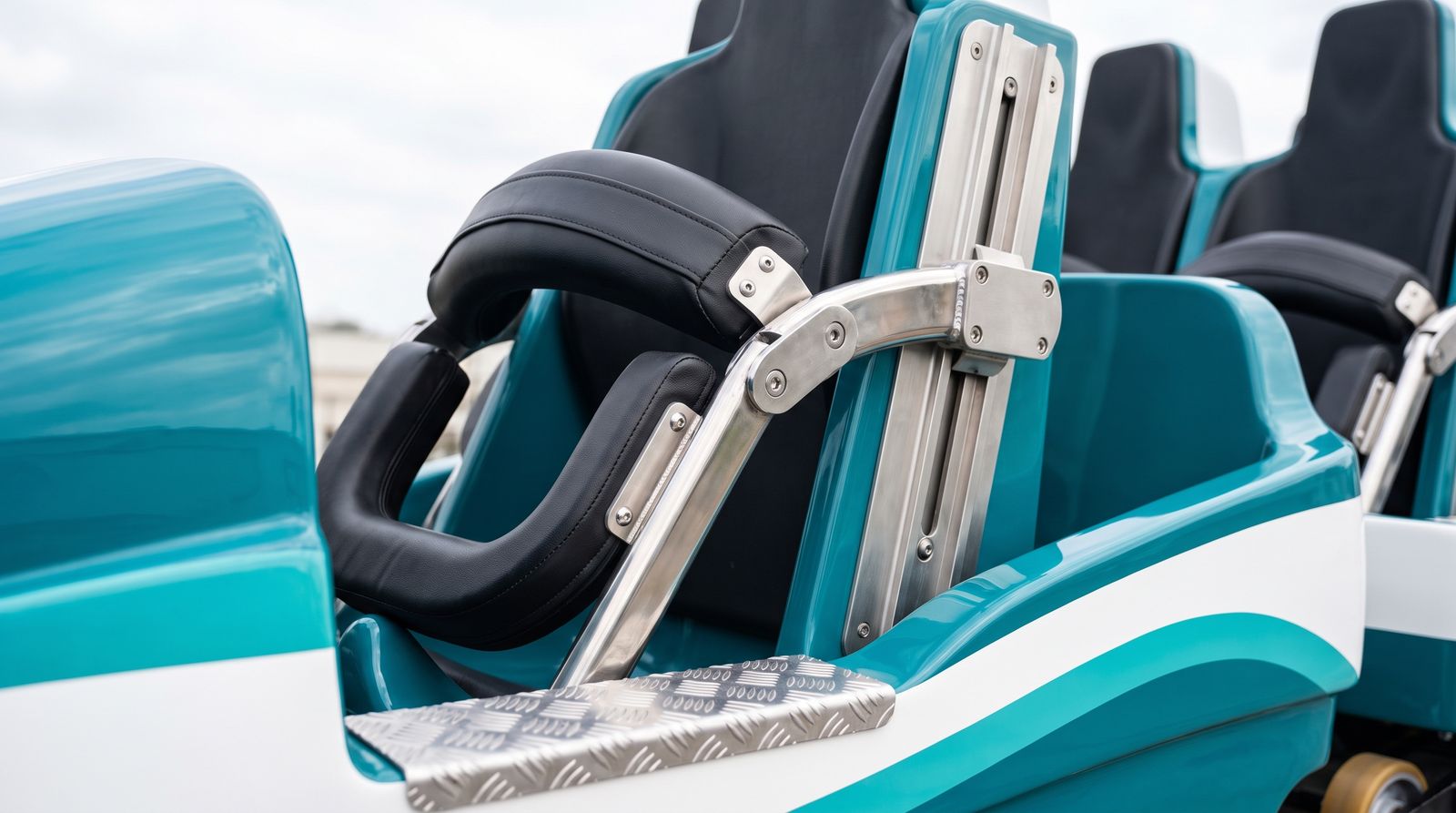
For two and a half years, the likeliest reason nobody else ordered one of B&M’s “surf coasters” wasn’t a lack of interest. It was a Dutch manufacturer’s lawyers.
What happened
Vekoma Rides Engineering sued Bolliger & Mabillard in April 2024, alleging that Pipeline: The Surf Coaster — B&M’s stand-up ride at SeaWorld Orlando, marketed as the world’s first “wave-jumping” coaster — infringed a Vekoma patent covering the restraint mechanism that makes the wave-jump sensation work. The case, filed in the US District Court for the Middle District of Florida, named both B&M and SeaWorld Orlando as defendants.
According to court records tracked by patent-litigation database PatSnap, the case was closed on 28 January 2026 with an order reading simply: “This case is DISMISSED with prejudice.” A dismissal with prejudice permanently bars Vekoma from bringing the same claim again — the form a case typically takes when the parties have settled, though the record doesn’t spell out whether money or a licence changed hands, and neither company has said anything publicly about the terms. What’s undisputed is the practical effect: B&M is now free to sell the surf coaster design to other parks without the threat of a second, related suit hanging over the sale.
The detail
| Spec | Detail |
|---|---|
| Patent at issue | US 7,987,793 B2, “Amusement Ride Device” |
| Patent holder | Vekoma Rides Engineering B.V. |
| Filed against | B&M and SeaWorld Orlando |
| Court | US District Court, Middle District of Florida (6:24-cv-00639) |
| Filed | 3 April 2024 |
| Dismissed | 28 January 2026, “with prejudice” |
| Patent expires | c. March 2027 |
| Ride | Pipeline: The Surf Coaster, SeaWorld Orlando |
| Manufacturer | B&M |
| Opened | 27 May 2023 |
| Height | 34 m (110 ft) |
| Speed | 97 km/h (60 mph) |
| Length | 900 m (2,950 ft) |
| Restraint | stand-up, with a torso harness that moves vertically relative to the footplate |
What it actually means
Start with what the patent is actually for, because “wave-jumping” is doing a lot of work in the marketing copy and rather less in the engineering. On a normal stand-up coaster, the restraint holds your torso rigidly against the footplate the whole way round. Vekoma’s US 7,987,793 describes a restraint that’s allowed to move: a torso support that travels vertically relative to the platform beneath your feet, at specific points on the ride. Build the track profile right, and that relative movement reads to the rider as their feet momentarily leaving the floor — a manufactured version of the moment a surfer’s board drops out from under them cresting a wave. It’s a genuinely clever piece of restraint engineering, not just a track shape; that’s exactly why it was patentable, and exactly why a rival building something that produces the same sensation was always going to invite a look at how the two mechanisms actually differ.
That’s the case Vekoma chose to test in court, and a with-prejudice dismissal is a real result even without disclosed terms — it’s the kind of ending litigants reach when they’ve agreed on money, or a licence, or both, not the kind a party walks away from empty-handed. Either way, the practical upshot is the same: the specific legal risk that made ordering a B&M surf coaster look like buying into someone else’s patent fight is gone.
That risk was doing more work in the market than the lawsuit’s low profile suggested. No park anywhere ordered a second B&M surf coaster in the two and a half years Pipeline stood as the only one — plausible enough on its own, but harder to read as coincidence once you know an active infringement suit sat over the ride’s core mechanism the entire time. Parks indemnify manufacturers on capital orders this size; an unresolved patent fight over the exact hardware being sold is precisely the kind of liability that makes a signature harder to get. RCDB listings and Chinese enthusiast trackers, including the group Roller Coaster Dream, now point to Happy Valley Shanghai as the most likely site for a second B&M surf coaster around 2027 — but that’s an enthusiast read of database entries, not a park announcement, and it should be treated that way until Happy Valley or B&M say otherwise.
Either way, the story here isn’t really about one ride in Florida. It’s the manufacturer beat in miniature: two European engineering firms, Vekoma and B&M, working out in a Florida courtroom exactly where one company’s restraint patent ends and another’s product begins — a dispute that will shape which parks, anywhere in the world, get offered this ride next.
The Dispatch verdict
A dismissal with prejudice isn’t a headline in itself, and it’s worth being honest that this doesn’t confirm a wave of surf coasters is coming — only that the single biggest legal reason not to build one has gone away. Whether Happy Valley Shanghai or anyone else actually signs is the part still unconfirmed. We’ll be watching for an official announcement rather than taking RCDB’s word for it.
Further reading: who builds the world’s roller coasters, and how to tell them apart, how roller coaster restraints actually work, and LSM vs hydraulic launch coasters explained.