
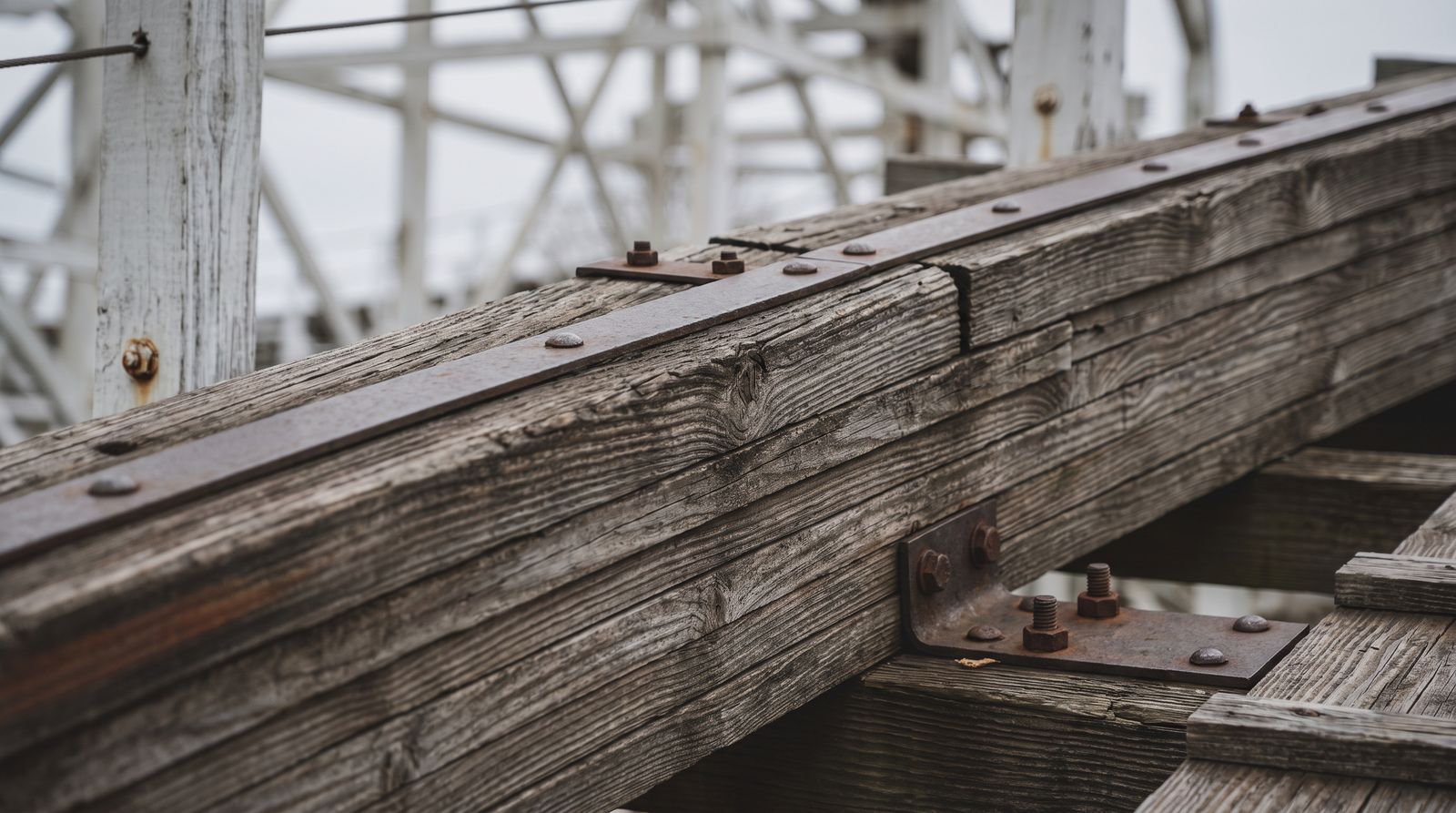
A wooden coaster that predates commercial radio in Britain doesn’t get put back into service the way a modern steel one does, and Blackpool Pleasure Beach’s Big Dipper is currently proving exactly why.
What happened
The Big Dipper, which opened in 1923 and is Britain’s second-oldest operating roller coaster, came to a stop mid-circuit at around 2pm on Thursday 23 July 2026. Riders reported hearing a loud crack before the train failed to crest the following hill; the timber between two sections of running rail had split. Pleasure Beach Resorts confirmed the train never left the rail — “the ride came to a halt around 2pm, at a very low point in the ride,” the operator said, adding that trained staff guided guests off manually and that nobody was hurt. The park later moved publicly to knock down social-media claims that the incident was a “derailment”, insisting the train stayed on the track throughout.
That distinction matters, but it hasn’t got the ride running again. Nine weeks on, the Big Dipper remains closed, with UK theme park press still reporting it unavailable as of mid-September and no reopening date published. The ride’s own listing on the coaster database RCDB now carries the status SBNO — standing but not operating. Blackpool Pleasure Beach has said only that an internal investigation into the cause is continuing and that repair work is expected.
The detail
| Spec | Figure |
|---|---|
| Opened | 1923 |
| Designer | John A. Miller, with William H. Strickler |
| Builder | Philadelphia Toboggan Coasters |
| Height | 18 m (60 ft) |
| Track length | 1,006 m (3,300 ft) |
| Grade II listed | 19 April 2017 (Historic England) |
| Incident date | 23 July 2026 |
| Weeks closed (as of publication) | 9 |
Historic England’s listing describes the Big Dipper as one of only 37 pre-Second World War wooden coasters left anywhere in the world, and — the detail that matters most here — the first coaster in Europe built to Miller’s under-friction wheel design. We’ve not seen an official cause published for July’s failure, so we won’t guess at one; what follows is the engineering context for why a fix, whatever it turns out to be, isn’t quick.
What it actually means
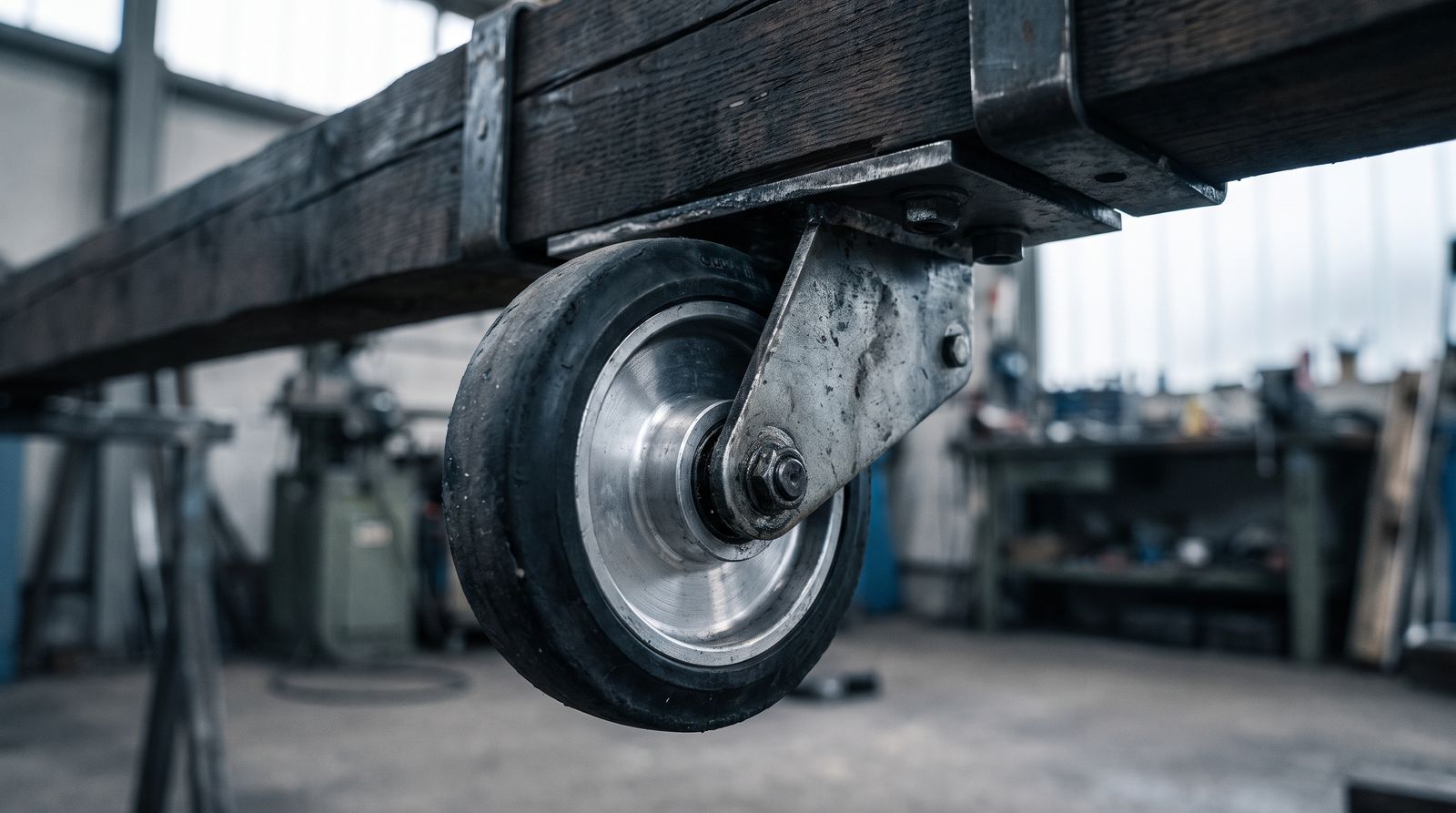
Start with why the Big Dipper’s listing calls out “under-friction” specifically. Before Miller’s 1919 patent, coaster trains sat on top of the rail held down by nothing but their own weight — which capped how steep a drop or how tight a curve a designer could safely draw. Miller’s fix was a third wheel, mounted underneath the train, gripping the rail’s underside as well as its top, so the train could no longer fly off the track on its way over a crest. We’ve covered the mechanism in full elsewhere — the short version is that it’s the invention that made every steep modern coaster possible, and the Big Dipper is one of the oldest working demonstrations of it still running anywhere.
The rail that wheel grips is the other half of the story. On a traditional wooden coaster, the running rail is a flat steel strap bolted over a stack of laminated timber, built in jointed sections along the structure rather than rolled as one continuous piece, the way a steel coaster’s tubular rail is. Those joints are, by design, the weakest points in the system — timber swells and shrinks with a British seaside’s weather, bolts work loose, and a hairline split between sections is exactly the kind of failure a track built from wood, rather than milled from steel, is always going to be more exposed to eventually. It’s also precisely the sort of fault that’s straightforward to spot once you know where to look, and straightforward to close a ride over the moment you do.
What makes this repair slow rather than routine is the Grade II listing. A modern steel coaster’s damaged section can, in principle, be re-fabricated to the original engineering drawing and swapped in; a listed wooden structure generally can’t be fixed with “close enough” timber and modern fixings without risking the very historic fabric that got it listed in the first place, which typically means matched materials, joinery methods sympathetic to the 1923 (and 1935, 1936, 1953) build phases, and sign-off beyond the park’s own maintenance team. None of that is optional box-ticking — it’s the price of keeping a hundred-year-old ride both running and genuinely original, rather than a modern coaster wearing a heritage paint job.
The Dispatch verdict
Nobody was hurt, the train stayed on the rail, and a careful, unhurried repair on a Grade II-listed structure is the responsible call, not a sign of a park dragging its feet. But nine weeks of silence beyond “investigation continuing” is a long time for visitors turning up hoping to ride Britain’s second-oldest coaster, and a dated statement from Blackpool Pleasure Beach on what actually failed and when it expects to reopen would cost the park nothing and would be a good deal more useful than another round of us all watching RCDB’s status field.
Further reading: how roller coaster wheels keep trains locked to the track, wood vs steel vs RMC hybrid track, explained, and why the lift hill clicks.